You ask a simple question: how much for a 2nm wafer? I wish the answer was simple. Having tracked semiconductor capital expenditure for years, I can tell you the sticker price is almost meaningless without context. A foundry like TSMC or Intel isn't selling you a bare silicon disc. They're selling you a slice of the most complex manufacturing infrastructure ever built, condensed into a 300mm diameter circle. The real number isn't a fixed price tag; it's a moving target defined by brutal economics, physics, and a race where second place is irrelevant. Let's cut through the marketing and look at what you're actually paying for.
What You’ll Find in This Deep Dive
The Short Answer (And Why It’s Wrong)
If you held a gun to my head and demanded a number, based on industry chatter, supply chain models, and extrapolation from 3nm and 5nm node pricing, I'd say a single 2nm wafer likely costs a chip designer between $20,000 and $30,000 at the high-volume production stage. For context, a leading-edge 5nm wafer might run you $12,000-$16,000. See the jump?
But here’s why that number is deceptive. That's the average price per wafer to the customer (like Apple or Nvidia). It assumes the foundry has already absorbed tens of billions in R&D and has its factory humming at high utilization with decent yield. If you're a startup trying to tape out a first-run prototype, the cost per wafer could be double that, easily. The foundry has to schedule your small batch, calibrate machines, and accept that yield might be terrible. They price that risk in.
The biggest mistake I see analysts make is taking a per-wafer cost and multiplying it by wafers per month to estimate a fab's revenue. It ignores the mountain of other services bundled in—design support, testing, packaging, and the sheer cost of reserving capacity. The wafer is just the vehicle.
What You’re Really Paying For: The Cost Breakdown
Let's peel the onion. Where does that $25,000 (or so) go? It's not like buying a car where you can option out the leather seats. At 2nm, everything is mandatory and astronomically expensive.
The Tools That Define Physics
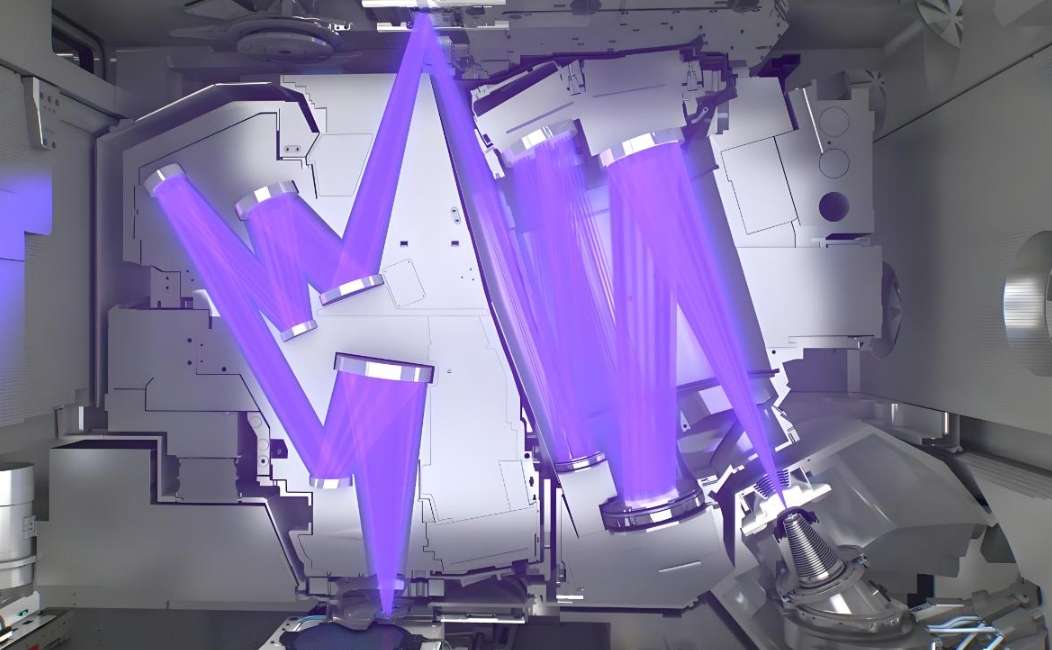
The heart of the cost is the machinery. An ASML High-NA EUV lithography machine, the only tool capable of printing 2nm patterns with the required precision, has a price tag pushing $400 million per unit. A single fab line needs multiple machines. They consume colossal amounts of power and require a building-within-a-building to stabilize temperature and vibration. The depreciation on this equipment alone is a massive chunk of your per-wafer cost.
And it's not just the litho machines. The deposition, etching, and metrology tools that surround them are all pushing their own physical limits, with price tags in the tens of millions each.
Materials and Complexity
Think the silicon is cheap? At 2nm, you're not just using bulk silicon. You're dealing with exotic new transistor architectures like Gate-All-Around (GAA) or RibbonFET. This involves stacking ultra-thin silicon channels, using new dielectric materials, and more metal layers for interconnects than ever before.
The process might involve over 1000 individual process steps. Each step adds cost, time, and a chance for something to go wrong. The chemicals, the gases, the ultra-pure water—all are specialty grades with minuscule tolerances for contamination.
Here’s a perspective most miss: The cost isn't just about making the transistor smaller. It's about managing the complexity around the transistor. The interconnects—the tiny wires that link transistors together—become the dominant challenge. Their resistance and capacitance can negate the performance gains of a smaller transistor. Fixing that requires new materials (like cobalt or ruthenium instead of copper) and new structures, which drives cost through the roof.
The Yield Problem: Where Perfect Wafers Go to Die
Yield is the silent killer of cost calculations. Yield is the percentage of functional chips on a wafer. At 90% yield, you lose 10% of your potential revenue. At 70% yield, you're in crisis mode.
For a 2nm process ramping up, yields might start painfully low—think 50% or less. Every defective wafer still costs the same $20k+ to process. That loss gets amortized across the good wafers, skyrocketing their effective cost. A foundry's entire process integration effort is a war to push yield up a few percentage points. Each point gained directly drops the cost per good chip.
I've seen teams celebrate a 2% yield bump like they won the Super Bowl. That's how financially critical it is.
| Cost Factor | Impact on 2nm Wafer Price | Why It's So Severe at 2nm |
|---|---|---|
| EUV Lithography (High-NA) | Extremely High | Machines cost ~$400M; complex optics, low throughput. |
| New Transistor Architecture (GAA) | Very High | Requires entirely new fabrication steps & material sets. |
| Process Step Count | High | Exceeds 1000 steps; each adds time, tool use, and risk. |
| Advanced Materials | High | New metals (Co, Ru), dielectrics; low-volume, high-purity supply. |
| Initial Low Yield | Extremely High | Early production yield can be below 50%, spreading cost over fewer good chips. |
| R&D Amortization | Very High | Billions spent on development must be recouped per wafer. |
Case Study: TSMC vs. Intel vs. Samsung – The Cost Battle
This isn't a theoretical exercise. How each player manages these costs dictates their survival and your investment thesis.
TSMC has the advantage of sheer volume and a monolithic process. They design one ultra-optimized 2nm process and run it for their entire client base (Apple, AMD, Nvidia, etc.). This spreads the astronomical R&D and tooling cost over millions of wafers, giving them the best shot at a lower per-wafer cost over time. Their challenge is keeping all those customers happy and their fabs full.
Intel is trying something radically different with its internal and external (IFS) foundry model. They have to bear the full cost burden themselves for their own CPUs first. Their per-wafer cost in the early days will be horrific because the volume is just their own products. The success of IFS is existential—they need external customers to spread the cost. If they can't attract them, their financials will show the strain, no matter how good the technology is.
Samsung often competes on price. They might accept lower margins initially to grab market share. But this is a dangerous game at 2nm. If their yields are lower or their process is less stable, that price discount could come straight from their profitability. Watching their foundry margin reports will be telling.
The takeaway? Don't just listen to the technology announcements. Listen to the capital expenditure calls and the gross margin guidance. When a CEO talks about "node economics," this is the brutal math they're referring to.
What This Means for Investors and Chip Buyers
For investors, this cost structure creates massive moats and equally massive risks.
- The Winner-Takes-Most Dynamic: Only companies that can achieve high volume and high yield will make money at 2nm. This favors the incumbent (TSMC) heavily.
- Capital Intensity as a Barrier: The $20+ billion price tag for a new 2nm fab means no new competitors are entering. It also means existing players' balance sheets and cash flow are under permanent stress.
- Pricing Power Shifts: Chip designers (AMD, Nvidia, etc.) become dependent on their foundry partner. If TSMC is the only game in town with viable 2nm yield, they have immense pricing power. This can squeeze chip designers' margins.
For companies buying these chips (the Apples and Googles of the world), the strategy is no longer just about performance. It's about total cost of ownership. Does paying a 50% premium for a 2nm chip in your server translate to 50% lower operational costs or higher revenue? Often, the answer for many applications will be "no," which is why nodes like 6nm or 12nm will have very long, profitable tails. The most advanced node isn't always the most economical choice.
Your Questions Answered
So, how much is a 2nm wafer? It's the price of admission to the future, a ticket bought not just with dollars, but with decades of accumulated knowledge, billions in risk capital, and a bet that the world will need more computing power than we can currently imagine. The number on the invoice is just the beginning of the story.